Introduction
Living in a compact home doesn’t mean settling for less comfort or style. Small apartments, studios, and townhouses can feel just as inviting as larger homes when designed with care. The secret lies in making thoughtful choices that support daily life while keeping the space visually calm. With the right ideas and sometimes the right interior design services you can turn even the smallest home into a place that feels balanced and personal.
This guide shares practical, real-life design tips that help small homes feel easier to live in, without clutter or wasted space.
Why Small Homes Deserve Thoughtful Design
The Real Challenges of Compact Living
Limited floor space, fewer storage areas, and close room layouts can make a home feel crowded quickly. Many people struggle with clutter building up or rooms feeling dark and closed in. Without planning, even daily routines like cooking, working, or relaxing can feel uncomfortable.
How Good Design Changes the Way a Small Home Feels
Good design helps rooms feel calmer and more functional. When furniture fits well and lighting is planned properly, small spaces feel easier to move through. Instead of feeling tight, the home begins to feel organized and welcoming.
Smart Layout Ideas That Actually Work in Small Homes
Open Layouts Without Removing Walls
You don’t need major construction to create a more open feel. Rugs can help define areas like living and dining spaces. Light furniture and open shelving allow rooms to stay connected while still having purpose.
Furniture Placement That Keeps Rooms Open
Leaving clear walkways is key. Avoid blocking windows or doors, and don’t overcrowd corners. Sometimes simply turning a sofa or shifting a table can make a room feel more relaxed and usable.
Furniture Choices Made for Small Spaces
Multi-Use Furniture That Saves Space
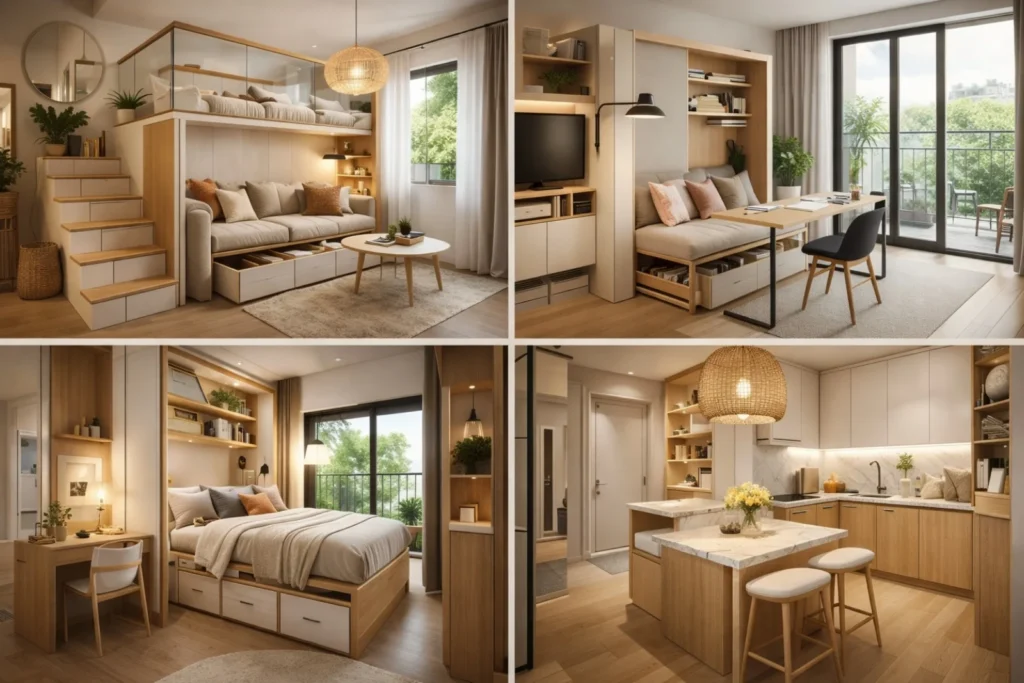
Pieces that serve more than one role are ideal. Sofa beds, nesting tables, and storage benches help reduce clutter while keeping rooms flexible. These choices are especially helpful in studio apartments or shared living spaces.
Right Size Furniture vs. Bulky Pieces
Large, heavy furniture can dominate a small room. Slim-profile sofas, open-leg chairs, and compact tables help keep things visually light. Choosing the right scale allows rooms to feel comfortable rather than crowded.
Color, Light, and Texture Tips for Compact Homes
Light Colors That Make Rooms Feel Open
Soft neutrals like warm white, light gray, and beige help reflect light. These shades create a clean backdrop that works well with natural and artificial lighting. Accent colors can still be added through cushions, artwork, or decor.
Using Mirrors and Lighting the Right Way
Mirrors help spread light across the room and add depth. Pair them with layered lighting—ceiling lights, table lamps, and wall fixtures—to avoid shadows and create a cozy atmosphere.
Storage Ideas That Don’t Look Like Storage
Hidden Storage You’ll Actually Use
Beds with drawers, ottomans with lift-up lids, and benches with storage are great for keeping everyday items out of sight. These options are practical and blend naturally into the room.
Vertical Storage Without Making Rooms Feel Tall
Wall shelves and tall cabinets help free up floor space. Keep shelves tidy and avoid filling them completely so the room still feels open and balanced.
Decor Tips That Add Style Without Overcrowding
Choosing Fewer but Meaningful Decor Pieces
Instead of many small items, choose a few pieces that reflect your personality. A framed photo, a plant, or a piece of art can say more than shelves full of objects.
Wall Decor That Doesn’t Eat Up Space
Wall-mounted art and floating shelves allow you to decorate without using floor space. Keeping wall decor aligned helps the room feel organized.
When to Consider Professional Help
How Interior Design Services Help Small Homes Feel Complete
Professional interior design services can guide layout choices, furniture selection, and overall style so the space feels cohesive and practical. Designers understand how to work with limited space and can offer ideas you may not think of on your own.
What to Expect When Working With a Designer
Most designers start by learning about your needs, habits, and budget. Some offer one-time consultations, while others help with full-room planning. Even short-term interior design services can bring clarity and confidence to your decisions.
Budget-Friendly Design Tips for Compact Homes
Small Changes That Make a Big Visual Difference
Updating lighting, adding a rug, or changing cushions can refresh a space quickly. These small updates can completely shift how a room feels without a large budget.
Where to Spend and Where to Save
Spend more on items you use daily, like seating or mattresses. Save on decor, which can be changed easily over time. Many interior design services can help you decide where your budget will matter most.
Common Small Space Design Mistakes to Avoid
Overcrowding Rooms With Furniture
Too much furniture makes rooms feel tight. Choosing fewer, better-sized pieces helps the space breathe.
Ignoring Lighting and Scale
Poor lighting or oversized decor can make rooms feel uncomfortable. Always think about how light and proportions affect the room.
Conclusion
A compact home doesn’t limit your style—it simply asks for smarter choices. With good layouts, well-sized furniture, balanced lighting, and thoughtful decor, small spaces can feel calm and inviting. Whether you design on your own or seek guidance from interior design services, the goal is always the same: a home that feels comfortable, personal, and easy to live in.